
As manufacturing industries become more competitive, companies are constantly searching for ways to improve efficiency, reduce operating costs, and increase production capacity. The growing demand for high-quality steel components has encouraged manufacturers to invest in advanced technologies that can deliver consistent results while supporting long-term business growth.
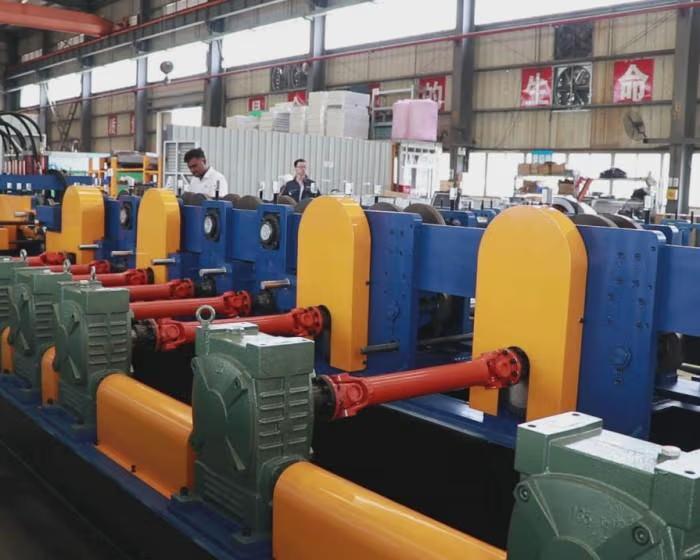
Automated roll forming lines have become a preferred solution for many manufacturers seeking to modernize their operations. By integrating advanced controls, intelligent monitoring systems, and efficient production processes, these systems help businesses improve productivity and maintain high-quality standards. Equipment such as a cold formed steel machine is increasingly being incorporated into automated production environments to support the evolving needs of modern manufacturing.
The Shift Toward Manufacturing Automation
Manufacturers today face numerous challenges, including rising labor costs, increasing customer expectations, and the need for faster production cycles. Traditional production methods often require greater manual involvement, which can limit efficiency and increase the risk of production errors.
Automation provides a practical solution by streamlining production processes and improving operational consistency. Automated roll forming lines allow manufacturers to produce steel profiles more efficiently while reducing dependence on manual operations.
As technology continues to advance, more businesses are recognizing the long-term advantages of upgrading their production facilities.
Benefits of Automated Roll Forming Lines
Increased Production Efficiency
Automated roll forming lines are designed to operate continuously with minimal interruptions. Advanced control systems help optimize production flow, allowing manufacturers to increase output and improve overall productivity.
Higher production efficiency enables businesses to meet growing market demand more effectively.
Improved Product Consistency
Automation helps maintain stable production conditions throughout the manufacturing process. Consistent machine settings ensure that steel profiles are produced with accurate dimensions and uniform quality.
Reliable product consistency is essential for construction and industrial applications.
Reduced Labor Requirements
Automated systems reduce the need for extensive manual intervention during production. Operators can monitor and manage processes more efficiently while the equipment performs many routine tasks automatically.
This helps manufacturers optimize workforce utilization and control labor costs.
Lower Material Waste
Accurate production controls and real-time monitoring help minimize production errors and material loss. Automated systems improve material utilization and contribute to more cost-effective manufacturing operations.
Reduced waste also supports sustainability objectives.
Enhanced Operational Reliability
Modern automated roll forming lines are equipped with monitoring technologies that help identify potential issues before they affect production. This improves machine reliability and reduces unexpected downtime.
Stable production performance contributes to better scheduling and customer satisfaction.
Applications of Automated Roll Forming Technology
Automated roll forming systems are widely used to manufacture components for:
- Commercial buildings
- Industrial facilities
- Warehouses and logistics centers
- Agricultural structures
- Roofing systems
- Wall cladding applications
- Steel framing systems
- Infrastructure projects
These industries benefit from the speed, precision, and reliability offered by automated manufacturing solutions.
Choosing the Right Automated Equipment
When upgrading production facilities, manufacturers should evaluate factors such as automation capabilities, machine accuracy, production capacity, operational flexibility, and long-term reliability.
Businesses investing in a cold formed steel machine should assess its ability to deliver efficient and consistent profile production. Similarly, a curving machine can provide additional manufacturing flexibility by producing specialized curved steel components for unique construction and industrial applications.
Selecting the right equipment can help manufacturers maximize the benefits of automation while supporting future business growth.
Conclusion
Manufacturers are increasingly upgrading to automated roll forming lines to improve productivity, enhance product quality, reduce labor costs, and optimize operational efficiency. These advanced systems provide the reliability and performance needed to compete in today's fast-changing manufacturing environment.
Whether utilizing a cold formed steel machine for structural steel production or a curving machine for specialized applications, automation helps businesses achieve greater efficiency and long-term success. As manufacturing technology continues to evolve, automated roll forming lines will remain a key driver of innovation and competitiveness across the industry.