
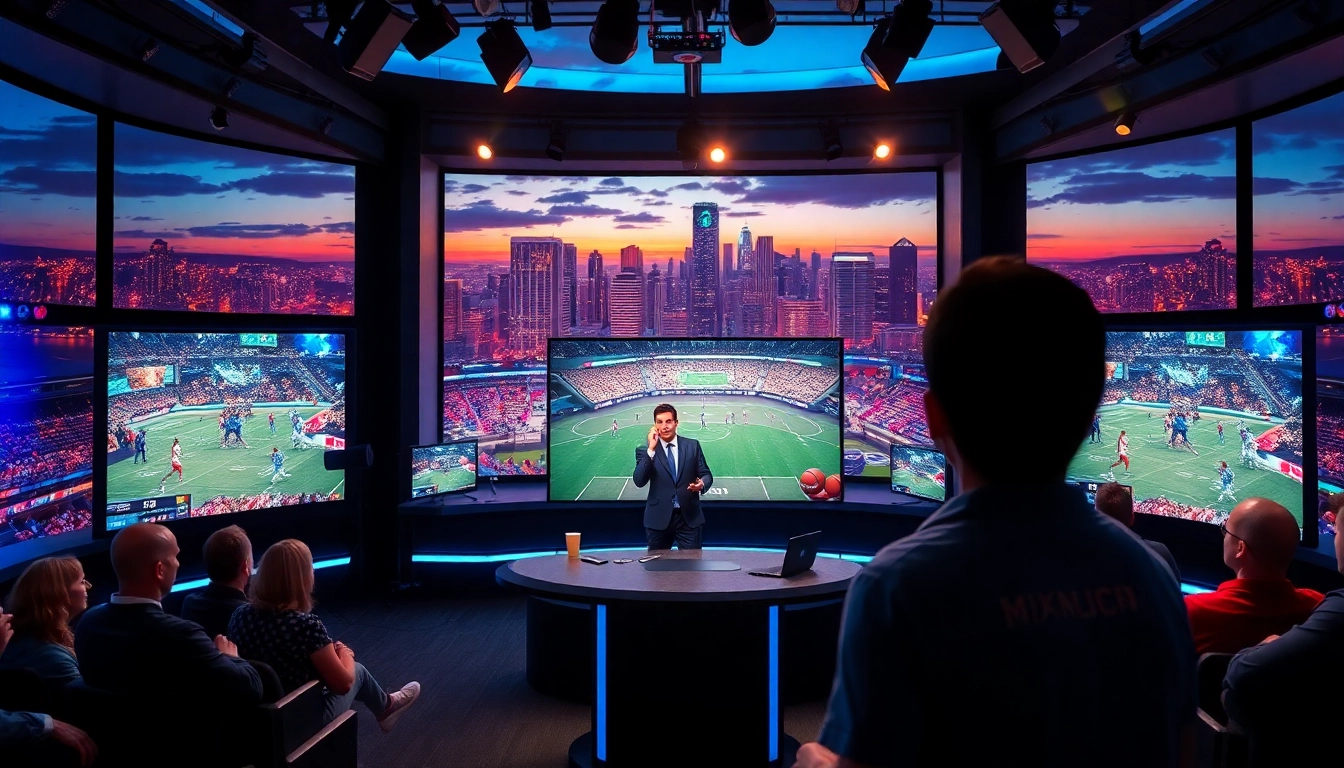
Understanding the Landscape of Sports Broadcasting
1. Definition and Scope
Sports broadcasting refers to the dissemination of sports-related content through various media channels, including television, radio, and online platforms. This field encompasses live event coverage, sports analysis, and commentary, designed to engage audiences and inform them about different sporting events. The scope of sports broadcasting has expanded dramatically over the years, not only in terms of the sports covered but also with the advent of new technologies allowing for greater audience participation and interaction. With the growing popularity of Sports Broadcasting, this landscape continues to evolve rapidly, reflecting changes in viewer habits and technological advancements.
2. Historical Evolution of Sports Broadcasting
The history of sports broadcasting can be traced back to the early 20th century when radio became a mainstream medium. The first live sports broadcast occurred in 1921, featuring a boxing match between Jack Dempsey and Georges Carpentier. This was a crucial landmark that set the stage for future developments. The introduction of television in the 1950s revolutionized sports broadcasting, allowing fans to watch games and events from the comfort of their homes. Broadcasting companies began investing heavily in sports rights, leading to critical partnerships that defined the industry. The expansion of cable television in the 1980s and the emergence of satellite networks also played significant roles in diversifying sports content and reaching broader audiences.
3. Current Trends in Sports Broadcasting
Today, sports broadcasting reflects various trends influenced by consumer behavior and technological advancements. One prominent trend is the shift towards digital platforms, with streaming services gaining popularity among younger audiences. As viewers increasingly favor on-demand content, traditional broadcasters are adapting by offering apps and subscriptions that allow fans to watch matches anytime, anywhere. Another trend is the rise of personalized content, where broadcasters utilize viewer data to tailor offerings. Moreover, social media platforms are playing an essential role in breaking news and disseminating live updates, enhancing audience engagement and reach.
Key Technologies Driving Sports Broadcasting
1. Live Streaming Innovations
The advent of high-speed internet and mobile technology has made live streaming a key component of sports broadcasting. Innovations in this area allow fans to watch their favorite sports in real time, often from multiple angles and with enhanced interactivity. Technologies like adaptive bitrate streaming ensure high-quality viewing experiences regardless of the viewer’s location or internet capacity. Features such as commentary options in multiple languages and camera angles cater to diverse audience needs, further enriching the viewer’s experience.
2. Analysis Tools for Improved Content
In the realm of sports broadcasting, analysis tools play an integral role in enhancing content. With advanced data analytics and machine learning, broadcasters can analyze player performance, game statistics, and viewer preferences. Such insights help in crafting compelling narratives around games and players, making broadcasts more engaging. Automated graphics and real-time stats integration during live coverage also elevate viewer experiences, providing detailed context to the action happening on-screen.
3. Interactive Broadcasting Techniques
Interactive broadcasting is transforming how audiences engage with sports content. Technologies enabling features like live polls, real-time quizzes, and augmented reality overlays encourage viewers to participate actively. For instance, during a live match, fans might vote for their player of the match or answer trivia questions relevant to the game. These interactions not only enhance viewer engagement but also gather valuable insights into audience preferences and behavior, allowing broadcasters to refine content further.
Creating Compelling Content for Sports Broadcasting
1. Engaging Narratives in Sports Coverage
Creating compelling sports content goes beyond just reporting scores; it involves weaving narratives that resonate with audiences. Successful broadcasters understand the importance of storytelling, whether recounting a player’s journey, the history of rivalries, or unfolding dramatic match moments. Working closely with experts and analysts to gather in-depth insights can provide context that enriches the narrative, making broadcasts more relatable and captivating.
2. Utilizing Analytics for Tailored Content
Analytics is crucial in understanding viewer preferences and behaviors, allowing broadcasters to tailor content accordingly. By analyzing viewer data, broadcasters can identify which sports or teams generate the most interest, what times audiences are most engaged, and how to best structure content for maximum impact. This data-driven approach enables the creation of targeted marketing strategies, ensuring content reaches the right demographics effectively.
3. Importance of Visual Storytelling
Visual storytelling plays a pivotal role in sports broadcasting. Utilizing high-quality graphics, highlight reels, and visual graphics can significantly enhance the storytelling aspect of sports coverage. The use of slow-motion replays and graphical representations of player statistics helps viewers comprehend the nuances of the game. Incorporating innovative visual techniques, such as drone footage and 360-degree views, not only elevates the broadcast quality but also captivates the audience's attention.
Monetization Strategies in Sports Broadcasting
1. Advertising Opportunities
Advertising remains one of the primary revenue streams for sports broadcasting. With a captive audience, broadcasters can sell commercial slots during live events, capitalize on product placements, and create sponsored segments. Integrated advertising strategies, which blend advertisements seamlessly into the viewing experience, often yield better results by engaging viewers without disrupting content flow.
2. Subscription Models Explained
Subscription models have gained traction as a sustainable monetization strategy for sports broadcasters, particularly in the digital realm. Networks are now offering subscription tiers that grant access to exclusive content, ad-free viewing, and live events. This inbound revenue stream encourages content creators to invest in high-quality programming while allowing viewers the flexibility of choosing how and when they consume sports content.
3. Partnership and Sponsorship Dynamics
Partnerships and sponsorships are vital in sports broadcasting, providing mutual benefits for involved parties. Broadcasters often collaborate with brands to offer joint promotions, leverage each other’s audiences, and generate higher ad revenues. These partnerships may also involve co-hosting specific sporting events or featuring branded content within broadcasts, creating a comprehensive marketing approach that amplifies visibility for both broadcasters and brands.
Future Directions for Sports Broadcasting
1. The Role of Artificial Intelligence
Artificial Intelligence (AI) is set to play an increasingly prominent role in sports broadcasting. From automating highlight creation to offering predictive analytics for better game analysis, AI technologies are transforming how content is produced and delivered. AI can analyze vast datasets to suggest optimal timings for broadcast interruptions or how to present content tailored to specific audience segments, enhancing overall viewer retention.
2. Virtual Reality and Augmented Experiences
Virtual reality (VR) and augmented reality (AR) technologies are on the brink of revolutionizing sports broadcasting by providing immersive experiences. Fans can engage with their favorite sports in ways previously unimaginable, from experiencing matches as though they're live in the stadium to interactive pre-game shows. These technologies not only provide entertainment but also forge deeper connections between viewers and the sports they love.
3. Predictions for the Next Decade
As we look towards the future, sports broadcasting will likely continue evolving alongside viewer preferences and emerging technologies. Personalization will become even more pronounced, allowing broadcasters to cater experiences to individual viewer profiles. Innovations may also focus on enhancing mobile accessibility through improved apps and platforms. Moreover, sustainability in broadcasting will likely become a priority, with green practices being integrated into the production of sports events and broadcasts.
FAQs
What is Sports Broadcasting?
Sports broadcasting involves transmitting live sporting events and related content to audiences via television, online streaming, or radio.
How has technology impacted Sports Broadcasting?
Technology has revolutionized sports broadcasting with improved streaming quality, interactive features, and enhanced audience engagement tools.
What are the key monetization methods in Sports Broadcasting?
Key monetization methods include advertising revenue, subscription fees, and partnerships with sponsors to generate income.
Why is analytics important in Sports Broadcasting?
Analytics provides insights into audience behavior, helping broadcasters tailor content for better engagement and viewer retention.
What trends should we watch in the future of Sports Broadcasting?
Stay alert for AI advancements, virtual reality applications, and innovative viewing experiences which are reshaping the sports broadcasting landscape.